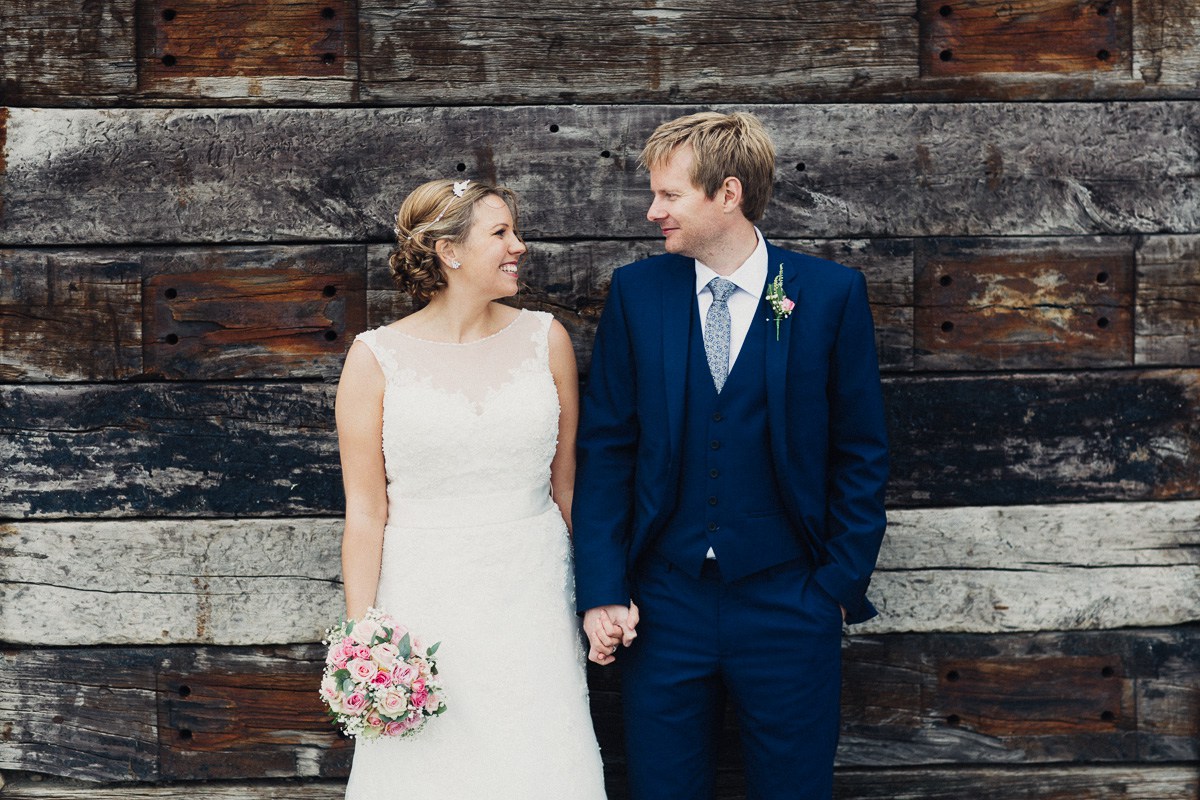
“We’re So Awkward in Photos”: A Wedding Photographer’s Honest Guide for Camera-Shy Couples
There’s a sentence I hear at almost every consultation call, usually within the first five minutes, usually delivered with an apologetic laugh:
“We should warn you — we’re really awkward in front of a camera.”
Couples say it like a confession. As if they’re the exception, the difficult case, the pair whose wedding gallery will need rescuing. So let me tell you what years of photographing weddings across Cheshire and the North West have taught me, and what I tell every couple who says it:
Nearly everyone says it. And nearly everyone is wrong about what it means.
You are not unphotogenic. There is, in my honest professional opinion, no such thing as an unphotogenic person — there are only people who have been photographed badly. And if a camera makes you freeze, stiffen, and forget what your own hands are for, that isn’t a flaw in you. It’s a completely rational response to a very strange request. This post is about why that happens, and exactly what to do about it before and during your wedding day.
The Honest Guide for Camera-Shy Couples
Prefer this whole guide as a beautifully designed PDF — including all ten no-posing prompts and a screenshot-able cheat sheet?
Download The Camera-Shy Couple’s Guide free:
Just drop your email and I’ll personally send you the PDF in less than five minutes!
No spam, no sales tactic, no pushy emails, promise!
Why You Freeze in Front of a Camera (It’s Not Your Face)
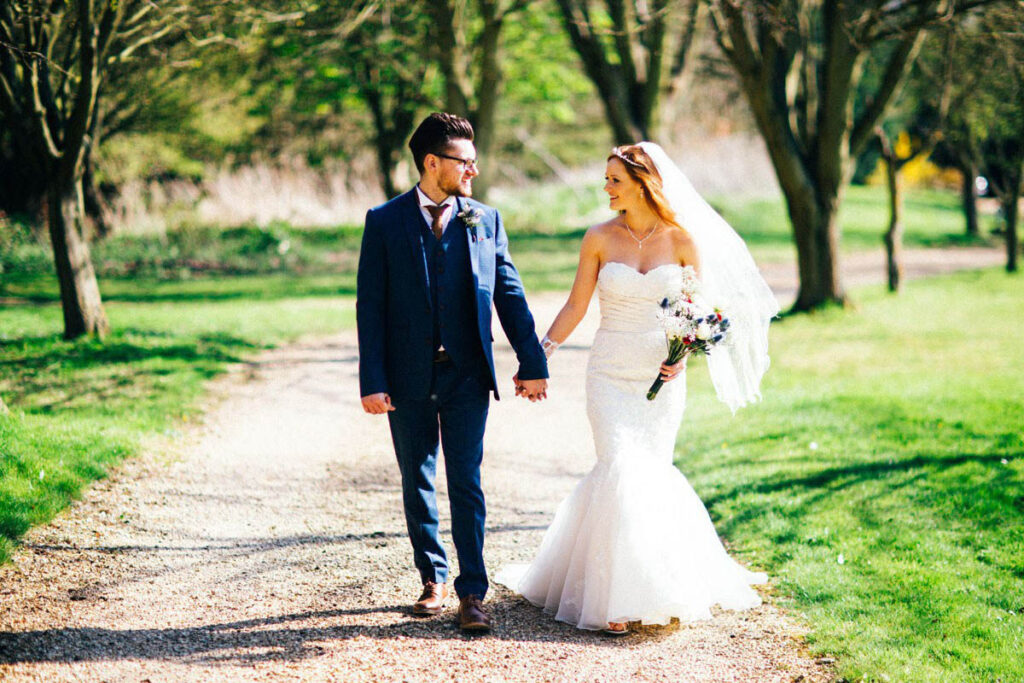
Think about the last photograph of yourself you genuinely liked. I’d put money on it not being posed. Someone caught you mid-laugh, mid-conversation, mid-life — and you looked like yourself, because you were being yourself.
That’s not a coincidence. It’s the entire secret, and it’s worth unpacking, because once you understand the mechanism, the fear loses most of its power.
Cameras don’t make you awkward – instructions do. “Stand there. Chin down. Now smile naturally.” Every instruction pulls you out of the moment and into your own head: Am I doing it right? What do I do with my hands? Is this my weird smile? And self-consciousness is precisely the thing a camera photographs best. Professional actors train for years to produce a believable smile on command. You shouldn’t have to do it on the happiest day of your life, ambushed, in front of a hundred guests.
Stillness makes it worse. When you stand rigidly in place, your brain has nothing to do except monitor how you’re being perceived — which is the exact recipe for the frozen, hostage-photo expression you’re worried about. Movement solves this almost instantly. Walking, turning, straightening a collar, leaning in to whisper something — the moment your body has a job, your face relaxes into its real expressions, because your attention has somewhere better to be.
And here’s the truth that should genuinely comfort you: it is impossible to take a bad photograph of a real moment. A genuine laugh has never once looked awkward in the history of photography. Neither has a real hug, real tears at a vow, or the look between two people who chose each other. When the moment is true, the photograph is true. Which means the goal was never to make you more photogenic — it’s to build a wedding day with room for real moments, and to have someone there who knows how to see them.
What to Do Instead of Posing: Prompts That Actually Work
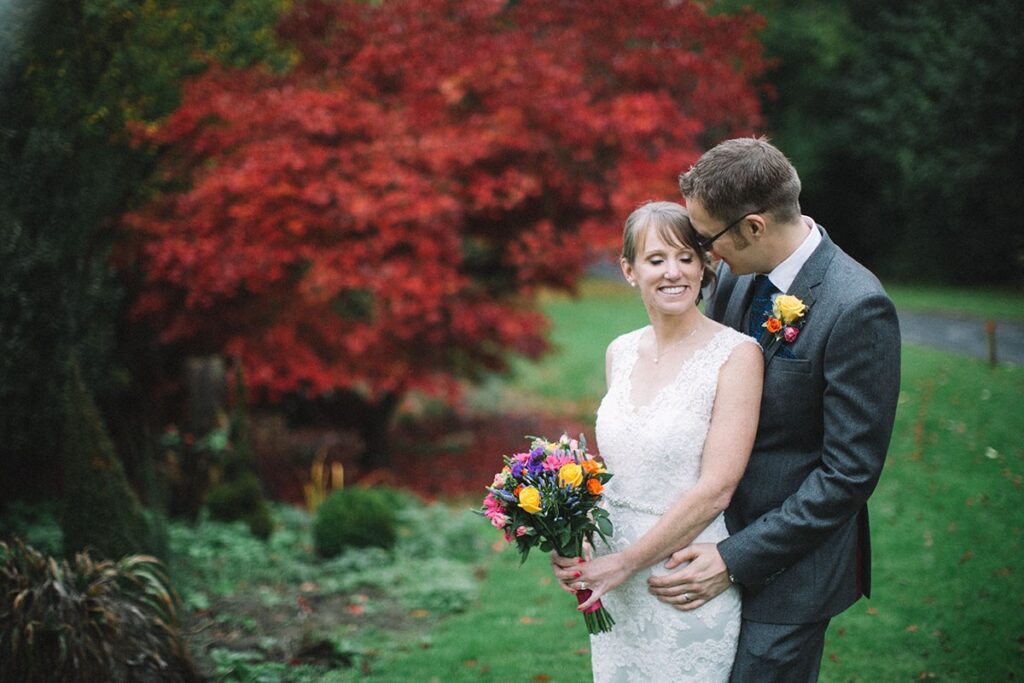
Everything that follows is built on one principle: movement, not mannequins. Give your body something to do and your face a reason to be real. These work in engagement sessions, couple portraits, and any time a lens appears — try them somewhere private and notice which ones make you laugh, because those are the ones that will work on the day.
Walk and talk. Hold hands and walk toward the camera while telling each other about the best meal you’ve ever eaten. It is physically impossible to walk-and-chat awkwardly.
Whisper your worst joke. Lean in close and deliver the stupidest joke you know. The photograph was never the joke — it’s the reaction.
The slow dance nobody choreographed. Hold each other and sway, badly. Bad dancing has produced better wedding photographs than good posing ever has.
Fix something on each other. Straighten his tie; brush something invisible off her shoulder. Small acts of care read as intimacy on camera because that’s exactly what they are.
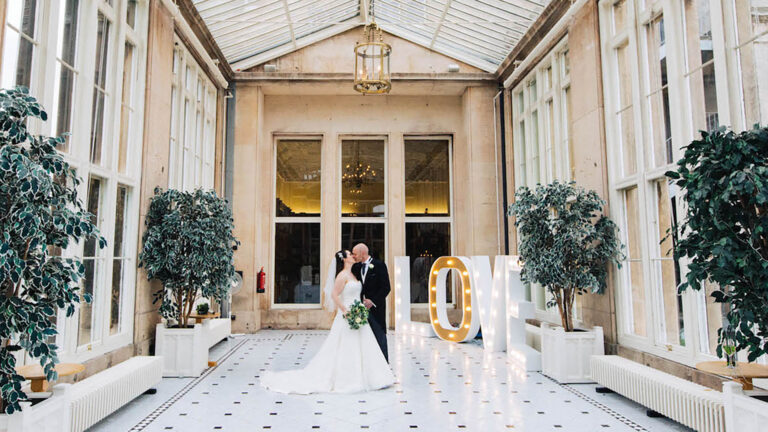
Foreheads together, eyes closed, breathe. Stand close, touch foreheads, close your eyes for ten seconds. It feels slightly odd in the moment and looks like a film still every single time.
Look away, then back. Both of you look out at the view; on a count of three, turn and look at each other. The half-second of renewed eye contact is the frame — you can’t fake it, which is why it works.
There are ten of these in the full guide, along with a cheat sheet built to be screenshotted to your phone — that page, honestly, is the only “posing practice” your wedding photos will ever need.
The Honest Guide for Camera-Shy Couples
Want all ten prompts plus the Anti-Awkward Cheat Sheet on your phone? The Camera-Shy Couple’s Guide is free and lands in your inbox instantly:
Just drop your email and I’ll personally send you the PDF in less than five minutes!
No spam, no sales tactic, no pushy emails, promise!
Before the Wedding: How to Arrive Camera-Confident
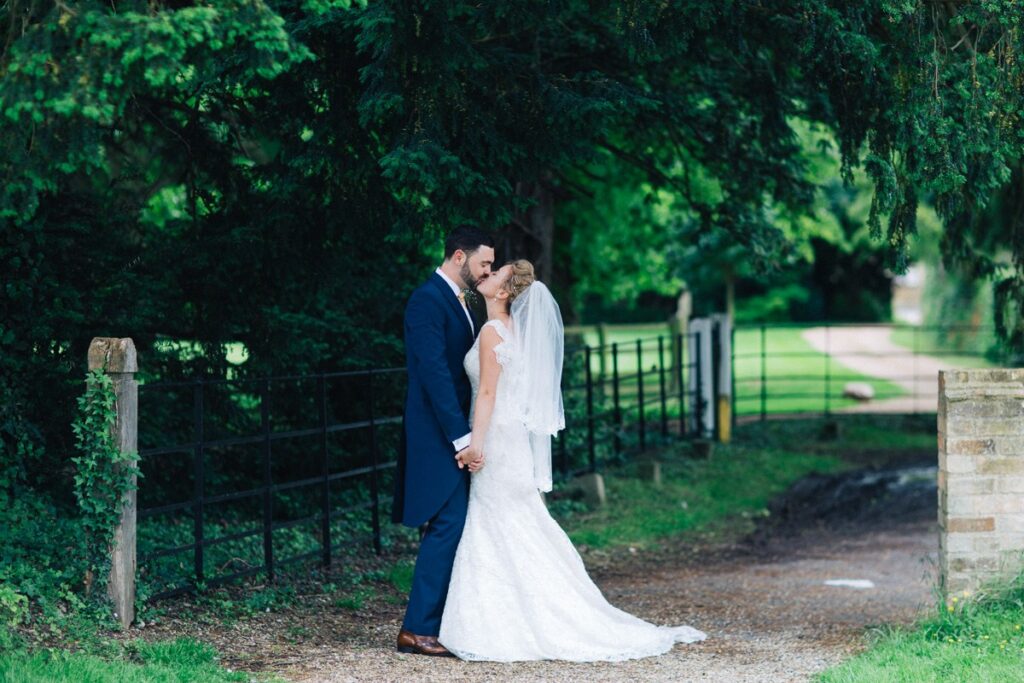
Confidence in front of a camera isn’t built by practising poses in the mirror — please don’t do that; it’s training for a performance you shouldn’t have to give. It’s built by removing every reason to perform. Four things do most of the work.
Book an engagement session — especially if you’re dreading it. One relaxed hour with your photographer before the wedding proves to your nervous system that the prompts above actually work, and it means that on the day itself, the person holding the camera is a friend rather than a stranger. In my experience the couples who were most anxious beforehand are always the most relieved afterwards — and visibly more relaxed at their wedding.
Say the scary sentence out loud, early. Tell your photographer you’re camera-shy at the very first call. A good one will change how they work for you — more documentary coverage, gentler direction, no lens pushed into your quiet moments. The worry you’re embarrassed to mention is one they solve every weekend of the season.
Choose outfits you can move in. If you can’t breathe, sit, or lift your arms for a proper hug, the camera will know. At fittings, test the hug, the sit-down, and the dance sway. An outfit you can move in is an outfit you can be yourself in — and being yourself is the entire assignment.
Give your day breathing room. Rushing is awkwardness fuel: a couple sprinting between formalities photographs exactly how it feels. A timeline with slack in it produces relaxed shoulders, easy laughter and portraits taken when the light is at its best rather than when the schedule coughed up a gap. (Timeline planning is a craft of its own — I’ve written a full guide to the perfect wedding day timeline, and the two go hand in hand.)
On the Day: What Great Photography Feels Like for Shy Couples
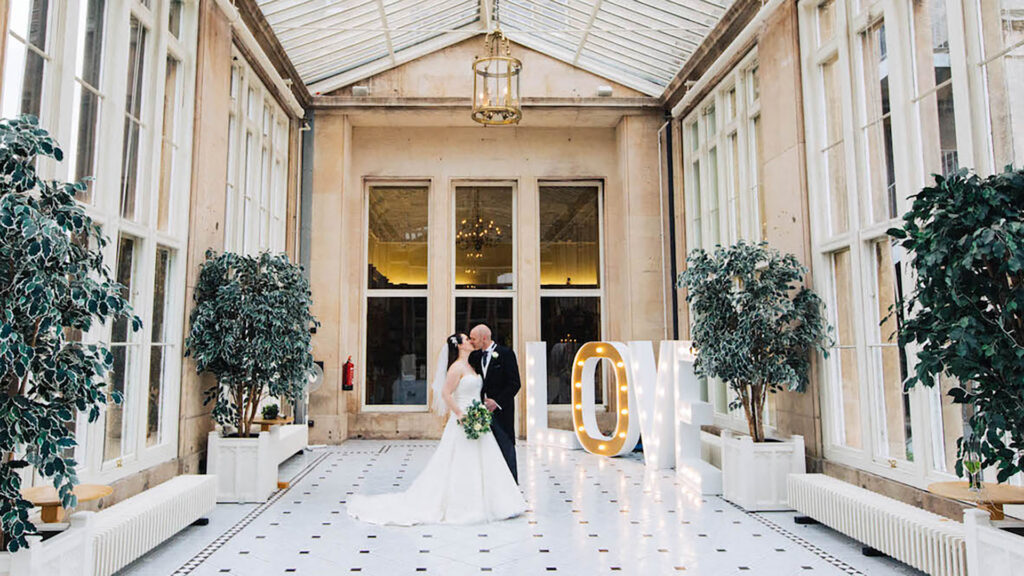
Here’s the part nobody tells camera-shy couples, and it changes everything about how you should choose a photographer.
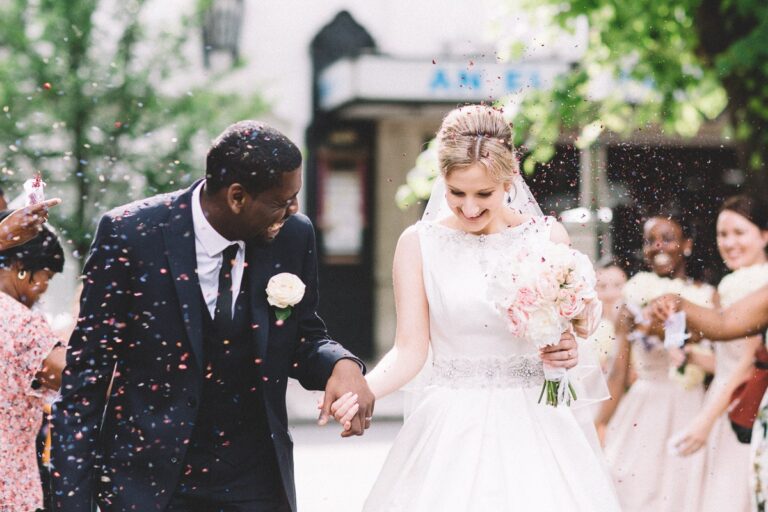
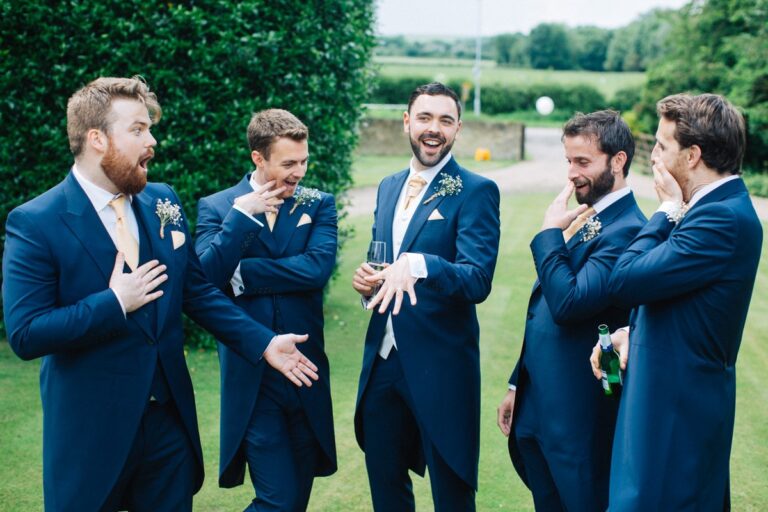
On a well-photographed wedding day, you should almost never be aware of the camera at all. With a documentary approach, your photographer works quietly from the edges, catching the day as it genuinely unfolds — and you cannot freeze in front of a camera you’ve forgotten exists. You’ll be too busy laughing at a best man with two pints of courage in him, hugging people who flew across the world, living the day you planned for a year. That’s not only more enjoyable; it’s where every photograph you’ll treasure actually comes from.
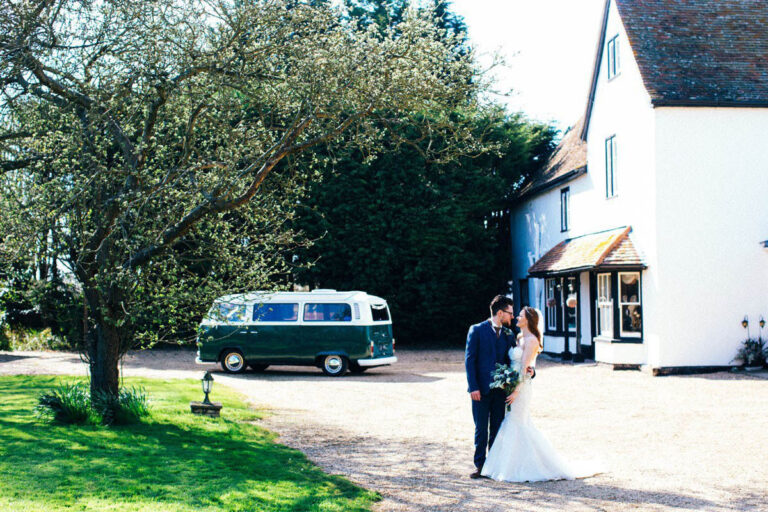
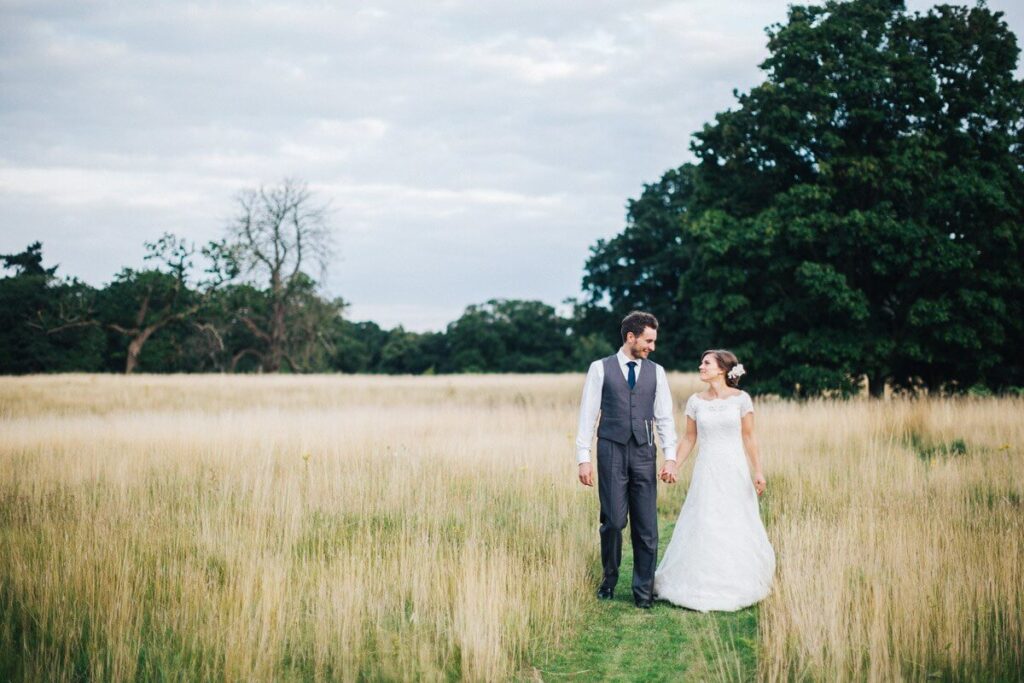
Then there are the couple portraits — the twenty minutes camera-shy couples dread most, and, when they’re done properly, the twenty minutes they consistently describe afterwards as the most relaxed of the whole day. Because done right, portraits at golden hour are never “stand there and smile.” They’re the prompts from earlier in this post, in the most flattering light of the entire day, with someone gently steering while the two of you simply walk, whisper, laugh and hold on. At Lumen Atelier we call it real all day, art by evening — the day documented as it truly happened, and twenty minutes of editorial fine-art portraits made without a single stiff pose in them.
Which gives you, incidentally, the single best interview question for any photographer you’re considering: “How do you work with couples who hate being photographed?” Then listen carefully. If the answer is about poses and shot lists, keep looking. If it’s about making you forget the camera exists — you’ve found the right kind.
And one final reassurance, because in years of weddings it has been true every single time: the fear is always worse than the day. Camera nerves evaporate somewhere around the second glass of champagne, because there is simply too much life happening to stay self-conscious. Your only job is to be in it.
The Honest Guide for Camera-Shy Couples
Prefer this whole guide as a beautifully designed PDF — including all ten no-posing prompts and a screenshot-able cheat sheet?
Download The Camera-Shy Couple’s Guide free:
Just drop your email and I’ll personally send you the PDF in less than five minutes!
No spam, no sales tactic, no pushy emails, promise!
Camera-Shy Wedding Photo FAQs
How do I stop looking awkward in wedding photos? Stop posing and start moving. Awkwardness comes from standing still under instruction; walking, whispering, dancing badly and genuine laughter give your body a job and your face a reason to be real. Choosing a documentary-style photographer removes most of the problem before it starts.
What if my partner hates having their photo taken? Tell your photographer early — it changes how they should work with you. Prioritise candid coverage over posed lists, book a short engagement session so the first time in front of their camera isn’t your wedding day, and use movement-based prompts rather than static poses.
Do engagement photos help with camera shyness? Enormously. One relaxed pre-wedding session builds familiarity with your photographer and proves the process is nothing like the posed photos you’re dreading. Couples who are most nervous beforehand are consistently the most relaxed at the wedding itself.
How long do couple portraits take on a wedding day? With a documentary approach, around twenty minutes — ideally timed to golden hour, the hour before sunset, when the light is at its most flattering. Everything else is photographed candidly while you enjoy your day.
Can you be photogenic if you think you’re not? Yes — because “unphotogenic” almost always means “photographed badly.” Real moments photograph beautifully on everyone; the frozen, stiff photos you’re thinking of were caused by posing under instruction, not by your face.
The Couples Who Warn Me Hardest
After all these weddings, I’ve noticed something I now tell every couple who apologises for being awkward: the ones who warn me hardest are, without a single exception so far, my favourite couples to prove wrong. Because when someone who has spent a lifetime dodging cameras opens a gallery and sees themselves — genuinely themselves, laughing, unguarded, beautiful — that reaction is the reason I do this job.
You don’t need to become someone who loves cameras. You just need a wedding day built so you never have to think about them.
The Honest Guide for Camera-Shy Couples
Prefer this whole guide as a beautifully designed PDF — including all ten no-posing prompts and a screenshot-able cheat sheet?
Download The Camera-Shy Couple’s Guide free:
Just drop your email and I’ll personally send you the PDF in less than five minutes!
No spam, no sales tactic, no pushy emails, promise!
Lumen Atelier is documentary wedding photography for couples across Cheshire and the North West who’d rather live their day than perform it — honest, unposed storytelling all day, woven with editorial fine-art portraits at golden hour. Movement, not mannequins. If that sounds like your kind of wedding, check your date here. Real all day. Art by evening.