The Perfect Wedding Day Timeline: A Photographer’s Guide
There’s a moment I see at almost every wedding I photograph. It’s around eleven in the morning, and it goes one of two ways.
In the first version, the bride is laughing with her friends, hair finished, glass of something cold in hand, with half an hour of nothing scheduled before the dress goes on. The room is calm. Her shoulders are down. Every photograph from this morning will show a person enjoying the best day of her life.
In the second version, hair and makeup are running forty minutes late, the cars arrive in twenty, someone is searching for the shoes, and the morning she imagined for a year is happening at a sprint. The photographs from this version are different — not because the photography changed, but because the day did.
The difference between those two mornings is never the venue, the budget, or the weather. It’s the timeline. After photographing weddings across Cheshire and the North West, I can tell you with complete confidence: the timeline is the least glamorous decision you’ll make about your wedding, and the one that shapes the day more than any other.
This guide is everything I know about getting it right — including the two sample timelines I share with my own couples, the golden hour planning method that transforms evening photographs, and the seven mistakes I watch cause chaos every single season.
Grab The Perfect Wedding Timeline Template
Want all of this as a beautifully designed PDF – including a fill-in worksheet and month-by-month sunset table? Download The Perfect Wedding Day Timeline free, and plan your day around the moments that matter
Just drop your email and I’ll personally send you the PDF in less than five minutes!
No spam, no sales tactic, no pushy emails, promise!
Why Your Wedding Day Timeline Matters More Than You Think
Most couples plan their timeline last, squeezed between final dress fittings and the seating plan, usually by copying whatever the venue suggests. I understand why — compared with choosing flowers, a schedule feels administrative.
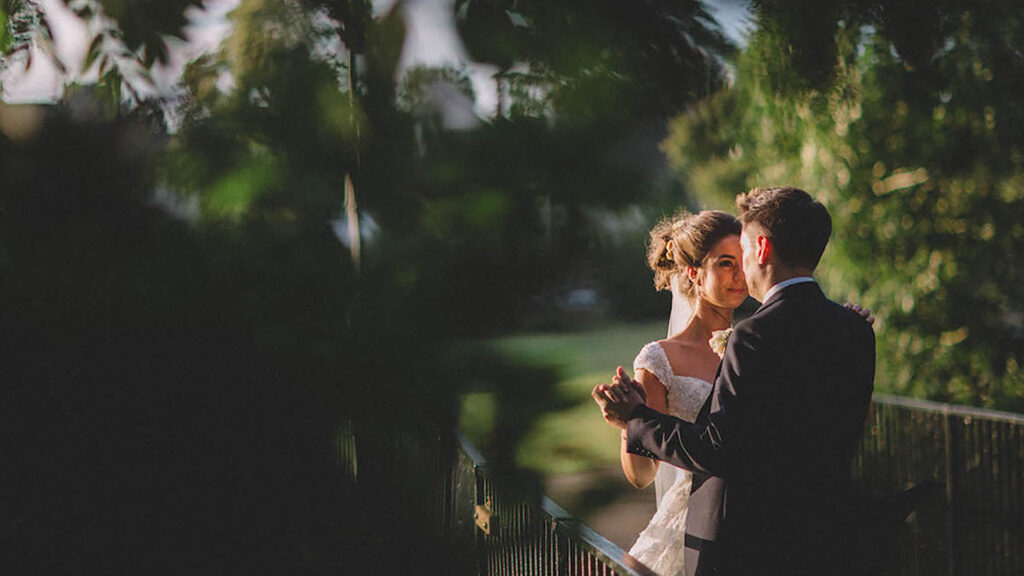
But here’s what the timeline actually decides: whether you get to be at your own wedding. Whether you linger over champagne with the friend who flew in from Australia, or wave at her from across the room while being hurried to the next thing. Whether your ceremony starts with a deep breath or a jog up the path. Whether your portraits happen in flat afternoon light because that’s when the gap was, or in the golden hour when the light does half the work for you.
A wedding day contains a fixed number of hours and a surprising number of moving parts: two people getting ready in different places, suppliers arriving in sequence, guests who need feeding and watering, a meal that takes longer than anyone believes, speeches that run over, a sunset that will not reschedule for anyone. The timeline is how all of that resolves into a day that feels effortless.
And there’s a photographic truth hiding inside it too. The images couples treasure most — a father seeing his daughter in her dress, grandparents holding hands during the vows, the unguarded look between you after the ceremony — are unposed and unrepeatable. They only happen when there’s room in the day for them to happen. A rushed timeline doesn’t just stress you; it tramples the very moments you hired a photographer to catch.
How to Build Your Wedding Day Timeline: Start With Two Fixed Points
Every good timeline is built around two anchors, and neither of them is negotiable.
The first is your ceremony time. Everything radiates outward from the moment you say “I do” — the morning builds backwards from it, the celebration builds forwards. Fix it first, and confirm it with your venue or church before planning anything else around it.
The second is your sunset. This is the one almost every couple misses. The most beautiful light of your entire wedding day arrives in the final hour before sunset — photographers call it golden hour, and it’s when the low, warm light turns even an ordinary backdrop cinematic. In the North West, that can mean 9:40pm in June or 3:55pm in December, which is why a summer timeline and a winter timeline should never look the same.
Once those two anchors are set, the rest of the day is a series of sensible durations strung between them. Here’s what those durations actually are.
A Sample Wedding Day Timeline: 2pm Church Ceremony
This is the classic full wedding day — a church ceremony with a separate reception venue. Adjust every time by the difference if your ceremony is earlier or later.
- 8:30am — Hair and makeup begins. Allow 45–60 minutes per person and a full hour for the bride. This is where most wedding day delays are born, so pad it generously.
- 10:30am — Photography coverage begins. Details first — the dress, flowers, invitations — then relaxed, candid coverage of the morning as it unfolds.
- 12:45pm — Into the dress. A calm thirty minutes, usually with your mum or maid of honour, and often one of the most emotional moments of the whole day.
- 1:20pm — Bridal party departs. Aim to arrive with ten minutes to spare; a breath outside the church beats a hurried entrance every time.
- 2:00pm — The ceremony. Church ceremonies typically run 45–60 minutes including the signing and procession.
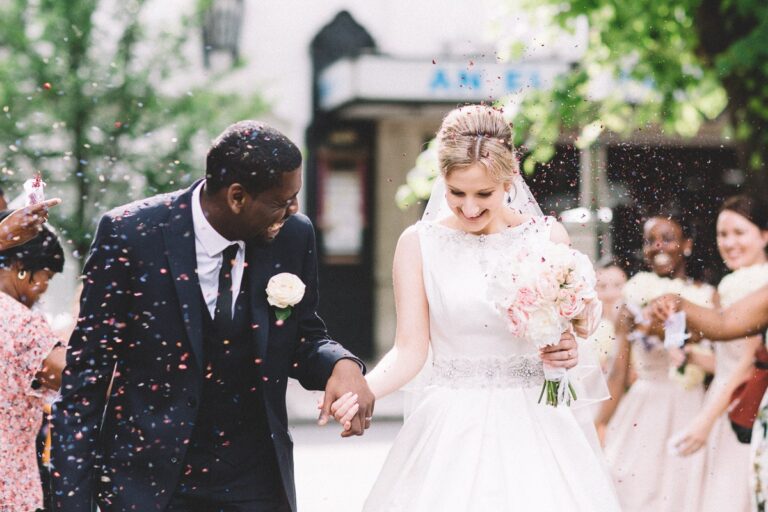
- 3:00pm — Confetti and congratulations. The confetti moment directly outside the doors is the one photograph every couple frames — brief your ushers to gather everyone.
- 3:30pm — Travel to the reception. Add fifteen minutes to whatever the satnav says. Wedding cars are never in a hurry.
- 4:00pm — Drinks reception. Ninety unhurried minutes. Family group photographs kept to six or eight combinations take about twenty minutes, leaving you free for your guests.
- 5:30pm — Call to dinner. Followed by your entrance.
- 5:45pm — Wedding breakfast. Allow a full two hours for a three-course meal.
- 7:45pm — Speeches. Scheduled, with each speaker told their slot.
- 8:15pm — Golden hour portraits. Twenty minutes, just the two of you, timed to the evening light rather than the schedule.
- 8:45pm — Cake cutting, flowing straight into the 9:00pm first dance and the party.
A Sample Timeline for a Single-Venue Wedding: 1:30pm Civil Ceremony
Everything under one roof is the most relaxed way to structure a wedding day — no travel, no convoy logistics, no gap for guests to fill.
- 9:00am — Hair and makeup begins, on site if the venue allows it; getting ready where you’re marrying is the greatest gift you can give your morning.
- 11:00am — Photography coverage begins, with time for both of you to have your preparations documented if you’d like both sides of the story told.
- 12:45pm — Into the dress.
- 1:00pm — Guests arrive; candid coverage begins.
- 1:30pm — The ceremony. Civil ceremonies run 25–30 minutes including the signing.
- 2:00pm — Confetti and straight into the drinks reception.
- 2:45pm — Family groups, fifteen minutes, six combinations, briskly and cheerfully done.
- 3:15pm — You, with your people. A full hour of nothing scheduled. Couples tell me this unscheduled hour is the part of the day they remember most vividly — protect it fiercely.
- 4:30pm — Call to dinner, then the 4:45pm wedding breakfast and speeches.
- 6:45pm — Room turnaround while evening guests arrive — a natural lull that’s perfect for fresh air and a quiet drink together.
- 7:30pm — Golden hour portraits, twenty minutes, with the exact time set by your month’s sunset.
- 8:00pm — Cake cutting and first dance, and the party takes it from there.
Marrying in winter? Sunset can fall before 4pm, so the couple portraits simply move to directly after the ceremony while the light is still gold, keeping the evening entirely for celebrating.
Grab The Perfect Wedding Timeline Template
Both of these timelines — plus the golden hour sunset table and a printable fill-in worksheet — are in the free PDF template. It’s the exact guide I plan real weddings with.
Just drop your email and I’ll personally send you the PDF in less than five minutes!
No spam, no sales tactic, no pushy emails, promise!
Golden Hour: The Secret Ingredient of Every Great Wedding Timeline
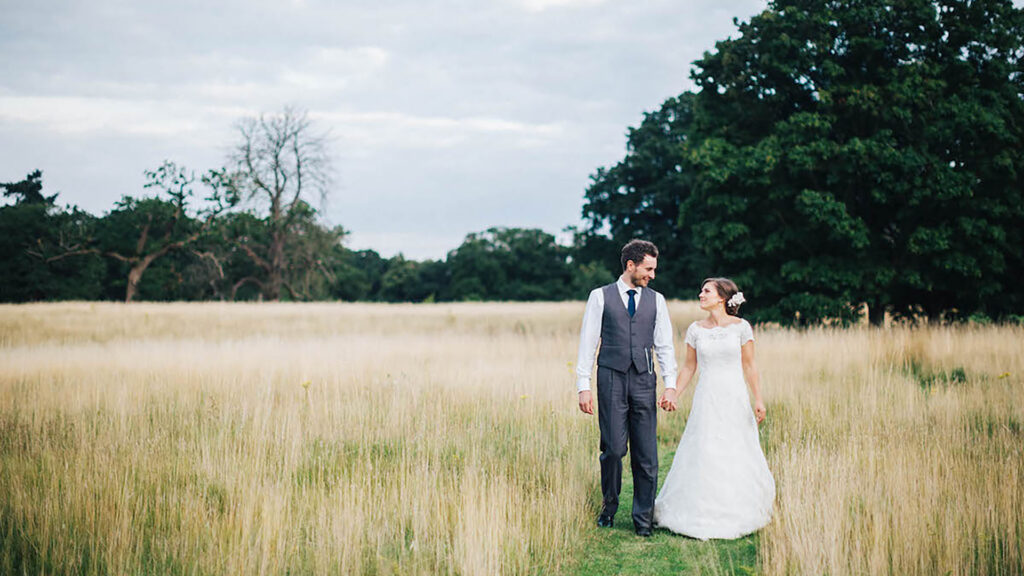
If you take a single idea from this entire guide, take this one: plan your evening around the light, not through it.
The hour before sunset is when photographs stop looking nice and start looking cinematic. The light comes in low and warm, backlights veils and champagne glasses, and flatters absolutely everyone. It’s the reason the images you’ve saved on Pinterest look the way they do — most of them were made in exactly this window.
The method is simple. Look up the sunset time for your wedding date (mid-month figures for the North West range from roughly 3:55pm in December to 9:40pm in June). Your portrait window starts about an hour before it. Then — and this is the part that takes actual discipline — ask your venue coordinator to keep that window clear of formalities. No cake cutting, no band call, no speeches. Twenty protected minutes is all it takes, and your guests will barely notice you’ve slipped away.
This is, incidentally, the heart of how I photograph weddings at Lumen Atelier: the day documented honestly as it happens, and then twenty minutes of editorial, fine-art portraits in that golden window. Real all day; art by evening. But whoever photographs your wedding, the principle holds — give them that hour, and you’ll double the beauty of your gallery with one scheduling decision.
The Seven Wedding Timeline Mistakes I See Every Season
Planning to the minute. A timeline with no slack fails by 11am. Add fifteen minutes of buffer to every phase; if you don’t need it, you’ll simply enjoy a longer drink. You can start a party early — you can’t un-rush a ceremony.
Underestimating hair and makeup. The single most common cause of a late ceremony. Confirm per-person timings with your artist, add a spare hour, and have the bride’s hair done first rather than last, so any overrun lands on someone with less riding on it.
A forty-shot family photo list. Every group photograph takes three to four minutes to gather, arrange and make. Twenty groupings is over an hour of your drinks reception gone. Keep the list to six or eight combinations that genuinely matter, and let every other grouping happen naturally through the evening.
Unscheduled speeches. “They’ll only be five minutes.” They are never five minutes. Give each speaker a slot, tell them the slot, and consider putting speeches before or between courses — nerves ruin fewer meals that way.
Ignoring the sunset. Couples plan around the caterer’s schedule and forget the light entirely, then wonder why their portraits happened under a grey 3pm sky. Check the sunset first; build the evening’s formalities around that window.
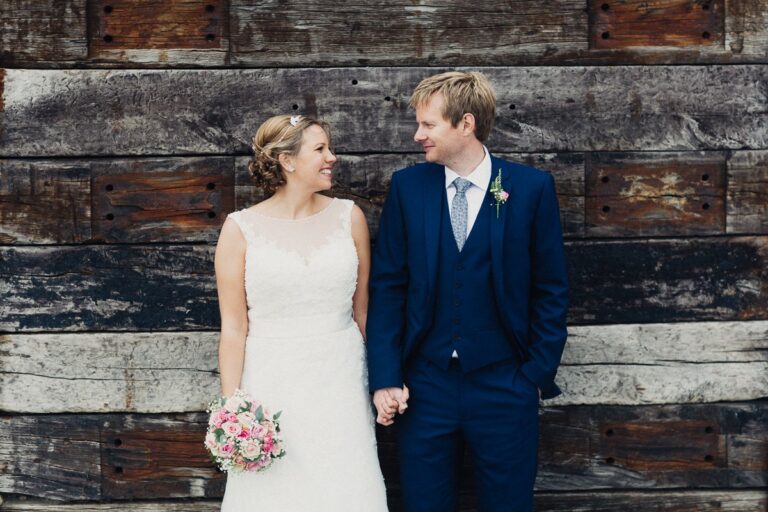
No time alone together. Ten minutes, just the two of you, sometime after the ceremony. Couples who skip it consistently tell me the day blurred past. Couples who take it remember everything.
Forgetting the in-between times. Travel, room turnarounds, receiving lines, a hundred guests finding their seats — the invisible gaps swallow forty-five minutes of every wedding. Name them in your timeline and they can’t ambush you.
Frequently Asked Questions
How long should a wedding day timeline be?
Most full wedding days run ten to twelve hours from the start of hair and makeup to the first dance. The wedding itself — ceremony to first dance — typically spans seven to eight hours, with a 1pm–2pm ceremony being the sweet spot for a full celebration that doesn’t start brutally early.
What time should a 2pm wedding start getting ready?
For a 2pm ceremony, hair and makeup should begin by 8:30am for a bridal party of three to four people, with photography coverage from around 10:30am and the dress going on about an hour and a quarter before you leave.
How long do wedding photos take on the day?
With a documentary approach, most of the day’s photography happens invisibly while you enjoy it. The only scheduled items are family groups — about twenty minutes for six to eight combinations — and twenty minutes of couple portraits at golden hour. Everything else is captured as it happens.
When should speeches be in the wedding timeline?
Either before the meal or between courses. Before the meal frees your nervous speakers to actually enjoy their food; between courses breaks a long meal up nicely. Whichever you choose, give every speaker a defined slot.
How much buffer time should a wedding timeline have?
Fifteen minutes per phase of the day is the working rule — morning preparations, travel, reception, meal. It sounds like a lot; it disappears invisibly and is the single difference between a day that feels calm and one that feels chased.
Your Timeline, Done Properly
A wedding day timeline isn’t really a schedule. It’s a decision about what kind of day you want to have – rushed or present, managed or lived. Get it right and everything else gets easier: your suppliers work better, your guests relax, and the real moments of your day have the room they need to happen.
And when they happen, they deserve to be caught.
Grab The Perfect Wedding Timeline Template
Take the guesswork out of it: download The Perfect Wedding Day Timeline — both sample timelines, the North West golden hour table, the seven mistakes, and a printable worksheet to build your own. Free, instantly delivered.
Just drop your email and I’ll personally send you the PDF in less than five minutes!
No spam, no sales tactic, no pushy emails, promise!
Lumen Atelier is documentary wedding photography for couples across Cheshire and the North West – honest, unposed storytelling all day, woven with editorial fine-art portraits at golden hour. If you’d like your day photographed the way it truly felt, check your date here. Real all day. Art by evening.