Wedding Photography Styles Explained – Complete Guide
Ask ten wedding photographers what style they shoot and you’ll get ten different answers – several of which mean the same thing, and a few of which mean nothing at all. “Timeless.” “Authentic.” “Editorial with a documentary edge.” “Romantic and natural.” The vocabulary of this industry is a soup of overlapping labels, and couples are expected to navigate it while also choosing a caterer and deciding whether Uncle Gary gets a plus one.
So let’s clear it up properly.
This guide covers every meaningful wedding photography style: what each one actually is, how it feels to be photographed that way, what your gallery will look like, who each style genuinely suits, and – the part most guides skip – the honest downsides of each. It also covers the editing styles that often get confused with shooting styles, the hybrid approaches most modern photographers actually work in, and a practical method for working out which is right for your day.
By the end you’ll be able to read any photographer’s website and know precisely what you’d be getting. That’s worth more than any list of tips, because choosing a style isn’t really an aesthetic decision. It’s a decision about how you want to spend your wedding day.
Why Style Matters More Than Any Other Photography Decision
Most couples choose a photographer on the portfolio – the images they like. Reasonable, but incomplete, because a portfolio shows you the output while hiding the process that produced it.
Two photographers can deliver galleries that look superficially similar and give you utterly different wedding days. One spends four hours directing you; the other spends twenty minutes. One asks you to recreate the shots on your Pinterest board; the other refuses to look at it. One will pause your ceremony exit for a better angle; the other would rather miss the shot than interrupt the moment.
Style is the difference between those days. It determines how much of your wedding you spend performing versus living, how much time you get with your guests, whether the quiet unrepeatable moments get photographed at all – and, twenty years from now, whether your album shows what your wedding looked like or what it felt like.
That’s the decision. The pretty pictures are downstream of it.
Grab The Perfect Wedding Timeline Template
Grab a beautifully designed wedding timeline PDF – including a fill-in worksheet and month-by-month sunset table. Download The Perfect Wedding Day Timeline free, and plan your day around the moments that matter!
Just drop your email and I’ll personally send you the PDF in less than five minutes!
No spam, no sales tactics, no pushy emails, I promise!
The Two Axes: How Photographers Actually Differ
Before the labels, understand the two variables underneath all of them. Almost every style is a position on these two axes:
Axis one: how much you’re directed.
At one end, pure observation – the photographer never speaks, never poses, and photographs only what happens. At the other, full direction – every image is composed, positioned and lit by the photographer. Most work sits somewhere between.
Axis two: how much the images are interpreted.
At one end, faithful documentation – colours as they were, moments as they happened, minimal processing. At the other, heavy interpretation – dramatic light, stylised colour, images built as much as captured.
Documentary sits at low direction, low interpretation. Fine art sits at high direction, high interpretation. Editorial sits at high direction, moderate-to-high interpretation. Traditional sits at high direction, low interpretation. Once you can place a photographer on those two axes, the label they use for themselves stops mattering – you can see what they actually do.
Documentary Wedding Photography (Photojournalistic)

What it is: Your wedding day photographed as it genuinely happens. The photographer works as an observer – reading the room, anticipating moments, positioning themselves before something occurs – and captures it without intervening. No posing, no staging, no “can you do that again for me?”
What the day feels like: For most of it, you barely register the camera. There’s no shot list to work through, no being pulled aside, no waiting while a photographer arranges people. You get ready, you marry, you eat, you dance – and it’s all photographed around you. Couples consistently report this as the least intrusive way to be photographed, and the reason is simple: nothing is being asked of you.
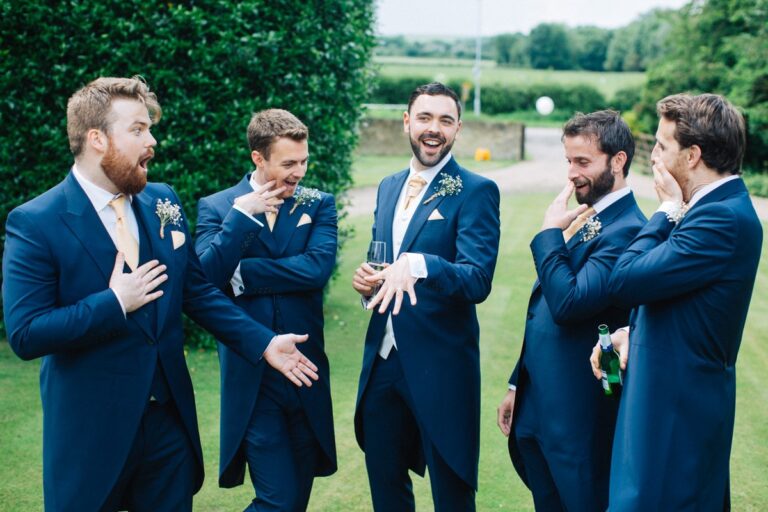
What the gallery looks like: The whole story, in sequence. Your grandmother’s face during the vows. Bridesmaids helping with a zip. The best man’s hands shaking through his notes. Guests you’d forgotten were even in that room. Documentary galleries are typically larger and more varied than posed ones because life produces more material than a shot list does.
Who it suits: Couples who want to remember how their day felt; anyone nervous about being photographed (you can’t be awkward if nobody’s asking you to perform); people whose favourite family photographs are the candid ones; couples with lots of people they love in one room.
The honest downsides: You cede control. You can’t guarantee a specific shot of a specific thing at a specific moment, because the photographer is following reality rather than a list. Pure documentary wedding photography also means no flattering direction at all – if you want some guidance for portraits, you want a hybrid (which most documentary photographers, including me, actually offer). And it depends entirely on the photographer’s judgement: candid work looks effortless and is the hardest thing in this profession to do well. A weak documentary photographer produces a gallery of missed moments and mediocre snapshots.
How to spot it in a portfolio: Look for reaction shots – people responding to things rather than looking at the camera. Look for the unglamorous middle of the day: the room turnaround, the quiet chat between courses. And look for whether the whole day is represented, not just the highlights. Anyone can shoot a confetti line; only a documentary photographer shows you 4:47pm.
Traditional (Classic) Wedding Photography
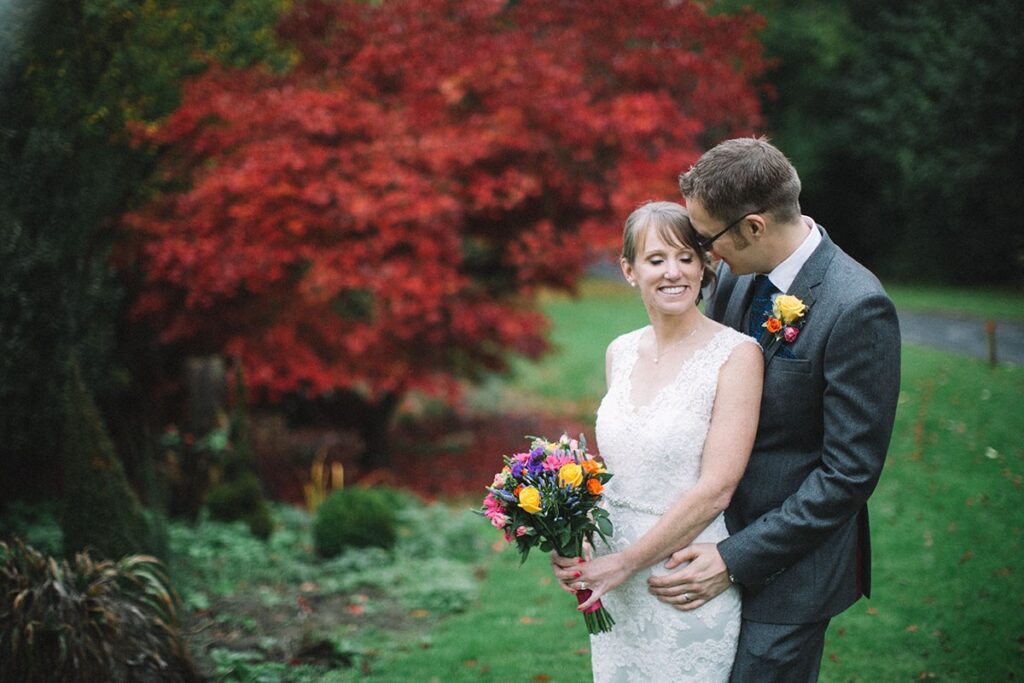
What it is: The style your parents had, and the one that persists at many weddings for good reason. Structured, posed coverage centred on a defined list of images: the group photographs, the formal portraits, the cake, the ceremony set pieces. The photographer directs; you follow.
What the day feels like: More structured. You’ll spend a meaningful block of time – often an hour or more – working through group combinations and posed couple shots. The photographer takes charge, which many couples find genuinely reassuring: someone is managing this, and nothing will be forgotten.
What the gallery looks like: Complete, orderly, and reliable. Everyone who should be photographed, is. The images are neat, well-lit and clearly composed, with the family groups every relative expects.
Who it suits: Couples with large extended families or cultural traditions where formal group photography matters enormously; parents footing the bill who have specific expectations; weddings where the family record is the point. Also anyone who genuinely likes structure – some couples feel safer being told where to stand, and that’s a legitimate preference.
The honest downsides: It costs time, and the currency is your reception. A long group list can consume the entire drinks reception (every combination takes three to four minutes to gather, arrange and shoot). The images can feel static – people arranged and smiling rather than living – and the spontaneous moments during those hours simply go unphotographed, because the camera is pointed at the arranged people instead.
Worth knowing: Almost nobody shoots purely traditional any more, and almost nobody wants purely no groups either. The modern consensus is a short, efficient family list (six to eight combinations, twenty minutes) inside an otherwise documentary day. That’s the compromise most couples are actually looking for when they say “candid, but we do want a photo with grandma.”
Editorial Wedding Photography

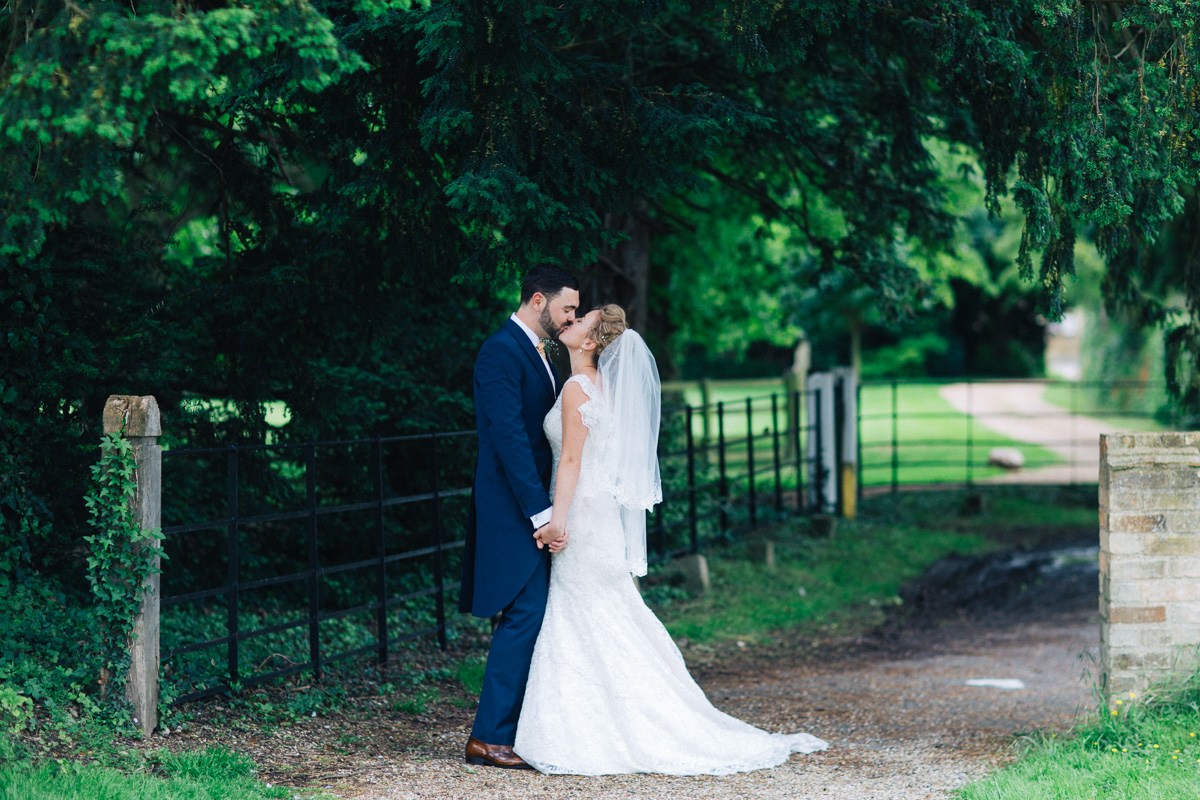
What it is: Wedding photography that borrows the visual language of fashion and magazine work. Deliberate composition, considered light, strong posing – but posing built on movement rather than static arrangement. Think of the difference between “stand here and smile” and “walk towards me, look at each other, don’t stop.”
What the day feels like: Directed, but in bursts rather than continuously. A good editorial photographer typically takes you away for concentrated portrait sessions – twenty to forty minutes – rather than directing throughout the day. During those sessions you’ll be given clear instruction: where to walk, where to look, what to do with your hands. Handled well it feels collaborative and surprisingly relaxed; handled badly it feels like a photoshoot you didn’t sign up for.
What the gallery looks like: Striking. Editorial images are the ones that stop the scroll – dramatic light, deliberate framing, couples looking undeniably good. These are the portraits that get printed large.
Who it suits: Couples who love fashion imagery; anyone who wants “the wall shot”; style-led weddings where the aesthetic is a core part of the day; couples who are comfortable being directed (or want to be – some people love it).
The honest downsides: It takes time away from your wedding, and if a photographer’s whole approach is editorial, that time can be substantial. There’s also a risk of homogeneity: editorial trends move as a herd, so a heavily editorial gallery from 2026 will read as 2026 in a way a documentary gallery won’t. And it can prioritise the photographer’s vision over your actual day – a beautiful set of portraits attached to a thin record of what really happened.
The modern hybrid: This is why most thoughtful photographers now combine the two – documentary coverage across the day, with a short concentrated editorial portrait session at the best light. You get the honest story and the gallery-wall images, and the editorial portion costs you twenty minutes rather than two hours. (That’s precisely the approach I work in: documentary all day, editorial fine-art portraits at golden hour.)
Fine Art Wedding Photography
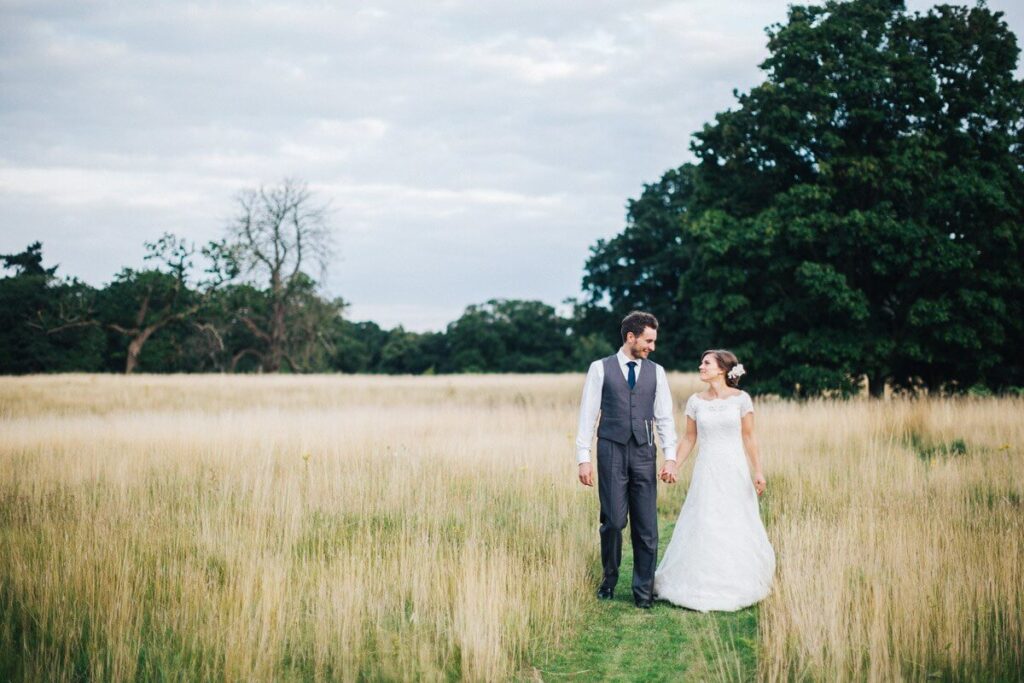
What it is: The most contested label in the industry, because it’s used to mean two different things. In its meaningful sense, fine art wedding photography treats each image as a crafted artwork: careful composition, painterly light, often shallow depth of field, frequently film or film-emulating digital, with a deliberate emphasis on beauty and atmosphere over completeness of record. In its diluted sense, it’s used as a synonym for “pretty and light-toned,” which tells you nothing.
What the day feels like: Slower and more considered. Fine art photographers tend to work deliberately – waiting for light, arranging elements, sometimes shooting film with its inherently unhurried pace. There’s usually meaningful direction during portraits and detail work, and less obsession with capturing every single event of the day.
What the gallery looks like: Beautiful, atmospheric, often smaller in volume but higher in individual impact. Soft light, elegant compositions, exquisite detail images (the dress hanging in window light, the rings on a linen napkin). Galleries feel curated – closer to a magazine editorial or a book than a complete chronological record.
Who it suits: Couples who see photographs as art objects for the home; anyone planning a design-led wedding with beautiful details worth documenting properly; couples who’d genuinely rather have sixty extraordinary images than four hundred good ones.
The honest downsides: Coverage gaps are the trade-off – the pursuit of beautiful frames can mean the messy, funny, ordinary moments don’t make the cut. Film-based work costs more and delivers slower. And the label’s dilution means you must judge by portfolio, not description: many “fine art” photographers are simply shooting bright, airy digital and using the term as marketing.
A useful distinction: Fine art describes craft and intent; documentary describes approach; editorial describes direction. They’re not mutually exclusive – a documentary photographer can absolutely finish images with fine-art care, which is what “documentary storytelling with a fine-art finish” means when it’s used honestly.
The Honest Guide for Camera-Shy Couples
Get the honest guide for camera-shy couples in beautifully designed PDF – including all ten no-posing prompts and a screenshot-able cheat sheet?
Download The Camera-Shy Couple’s Guide free:
Just drop your email and I’ll personally send you the PDF in less than five minutes!
No spam, no sales tactic, no pushy emails, promise!
Dark and Moody vs. Light and Airy
These get called styles, but they’re really editing aesthetics – colour and tone decisions applied after the wedding – and they can be layered onto almost any shooting approach.
Light and airy: Bright, pale, low-contrast, warm-neutral. Whites lifted, shadows opened, greens pushed toward sage. Feels soft, romantic and clean. Dominant in fine art work and popular for summer, garden and coastal weddings. Watch out for: pushed too far it turns hazy and washed out, skin tones go pink or grey, and darker skin tones in particular can be rendered poorly. Ask specifically to see full weddings, not highlights.
Dark and moody: Deep shadows, rich saturated colour, high contrast, often a warm or earthy grade. Feels cinematic and dramatic. Suits autumn and winter weddings, castles, candlelight and evening receptions. Watch out for: it dates quickly – dark and moody was the look of the late 2010s and now reads as of that period. Heavy grading also fights against skin tones and can make a bright summer wedding look artificially sombre.
True-to-colour / timeless: The middle path, and increasingly the preference of photographers thinking long-term. Accurate skin tones, natural colour, restrained contrast. The argument for it is simple: heavily stylised edits are fashion, and fashion dates. Your wedding photographs need to still look right in 2056, when today’s grading trends will read exactly the way heavy 1980s soft-focus vignettes read now.
The question to ask any photographer: “Will these images look dated in twenty years?” It’s a fair question and a good photographer will have thought about it.
The Other Styles and Techniques You’ll See
Direct flash / flash-on-camera.
The deliberately raw, party-photography look – hard flash, high contrast, 90s disposable-camera energy. Genuinely brilliant for dance floors and late-night chaos, and currently very fashionable. Almost always used as one element within a broader style rather than a whole approach. Be aware it’s a strong trend, with everything that implies about longevity.
Film photography.
Actual film – usually medium format – for its distinctive grain, highlight roll-off and colour. Unmatched aesthetic character, genuine scarcity value, and an unhurried shooting pace. The trade-offs are real: higher cost, slower delivery, limited frames, and weaker performance in very low light. Many photographers now shoot hybrid – digital for coverage, a few rolls of film for portraits.
Black and white.
Not usually a whole style, but a strong preference for some photographers. Monochrome strips out colour distraction and emphasises emotion, gesture and light – which is why so many of the most enduring documentary wedding images are black and white. Ask whether you’ll receive both versions of images (you usually should).
Cinematic / filmic.
A blurry label meaning “looks like a film still” – typically wide aspect crops, motion, atmospheric light and muted grading. Sometimes substantive, sometimes just a word. Judge the portfolio.
Drone / aerial.
A technique rather than a style – establishing shots of venue and landscape. Lovely for context, weather- and permission-dependent, and no substitute for coverage on the ground.
Vintage / analogue-emulating digital.
Digital processed to mimic film grain and colour. Cheaper and faster than real film, with variable authenticity. If the film look matters to you, ask directly whether it’s actual film.
How to Choose the Right Style for Your Wedding
Forget the labels for a moment and answer four questions honestly. Your style is the sum of your answers.
1. How do you want to spend your wedding day?
This is the biggest question and the one couples skip. If the thought of two hours away from your guests being directed sounds awful, you want documentary-led coverage with a short portrait session. If you love the idea of a proper photoshoot with your new spouse, editorial suits you.
2. What will you do with the photographs?
If you want one extraordinary print above the fireplace, ensure your photographer does strong editorial or fine-art portraits. If you want an album that tells the whole story to your grandchildren, coverage breadth matters more than a handful of showstoppers. Most couples want both – which is an argument for the hybrid approach.
3. How do you feel about being photographed?
Be honest, especially about the more camera-shy of you. Nervous couples do far better with documentary-led coverage and movement-based direction than with static posing. (If this is you, my guide for camera-shy couples covers exactly how to handle it.)
4. Who else has expectations?
Parents, grandparents, cultural traditions. If a formal family portrait matters to someone who matters to you, budget twenty minutes for it and choose a photographer who’ll run it efficiently. It’s not a compromise of your style – it’s twenty minutes.
Then, and only then, look at portfolios. And when you do:
Look at complete weddings, not highlight reels. Every photographer’s greatest hits look impressive. Ask to see two or three full galleries start to finish – that shows you consistency, coverage, and what your actual gallery will resemble.
Check the ordinary moments. Anyone can make a beautiful couple in golden light look good. How do they photograph the room turnaround, the speeches from the back, the drinks reception on a grey day? That’s most of your wedding.
Ask how much of your day they’ll need. Convert style into hours: “How long do you need for family groups? For couple portraits? Will we be away from our guests?” The answer tells you more about your day than any label.
Ask the sorting question: “How do you work with couples who hate being photographed?” If the answer is all about posing, you’re hearing a plan to direct you all day. If it’s about making you forget the camera exists, you’re hearing documentary instincts. (More on choosing well in my full guide to choosing a wedding photographer.)
The Hybrid Reality: What Most Modern Photographers Actually Do
Here’s the thing the style guides rarely admit: almost nobody works in one pure style any more, and the couples who insist on one usually end up disappointed.
Pure documentary means no direction at all – no flattering portraits, no help when you’re standing awkwardly in the world’s most beautiful light. Pure editorial means a wedding day spent shooting rather than celebrating. Pure traditional means an hour of your reception in a queue. Each pure form sacrifices something most couples don’t actually want to sacrifice.
So the dominant modern approach is a considered hybrid: documentary coverage for the overwhelming majority of the day, a short and efficient family group session, and one concentrated block of directed portraits timed to the best light. The proportions vary by photographer – and that ratio is the real thing you’re choosing between, far more than the labels on their homepage.
When you’re comparing photographers, ask them to describe the ratio directly: how much of my day is observed, and how much is directed? A clear answer tells you everything the word “timeless” never will.
For what it’s worth, here’s mine, plainly: documentary storytelling from morning to dance floor, six to eight family groups in twenty minutes, and twenty minutes of editorial fine-art portraits in the golden hour before sunset. Real all day, art by evening. It’s the ratio I’ve found gives couples the honest record of their wedding and the images worth hanging – without them losing an afternoon of their own party. You’ll find plenty of photographers who balance it differently, and some of them will be right for you.
Frequently Asked Questions
What is the most popular wedding photography style? Documentary-led hybrid coverage – candid storytelling across the day combined with a short session of directed portraits – is now the dominant approach in the UK. Purely traditional posed coverage has declined sharply, though a short family group list remains near-universal.
What’s the difference between documentary and photojournalistic wedding photography? Nothing meaningful – they’re used interchangeably for the same observational approach. Some photographers prefer “photojournalistic” for its news-photography connotations and “documentary” for its storytelling ones, but the working method is identical.
Is fine art wedding photography the same as light and airy? No, though they’re often conflated. Fine art describes an approach to craft and composition; light and airy describes an editing aesthetic. A fine art photographer can shoot dark and moody, and plenty of light-and-airy photographers aren’t doing anything you’d call fine art.
Which wedding photography style is best if we’re awkward in photos? Documentary-led coverage with movement-based direction for portraits. Most of the day you’re not being photographed at you, you’re just living it – and directed prompts based on movement (walking, whispering, dancing) produce natural expressions where static posing produces frozen ones.
Do wedding photography styles affect price? Indirectly. Style itself doesn’t set price – experience, demand, hours, deliverables and film costs do. Film-based fine art work tends to cost more due to materials and processing; otherwise, a photographer’s price reflects their standing rather than their aesthetic.
Can I ask my photographer to shoot in a different style? Within limits. A photographer will happily adjust the ratio – more or fewer groups, longer or shorter portraits – but asking a documentary photographer to deliver a heavily posed editorial gallery (or vice versa) rarely works. Choose someone whose natural style is what you want, rather than trying to redirect one whose isn’t.
Will heavily edited wedding photos look dated? Strongly stylised colour grading – heavy dark-and-moody, extreme light-and-airy, fashionable film emulations – tends to age with the era it belongs to, in the same way 1980s soft-focus does now. Naturally-toned, true-to-colour editing is the safer choice for images meant to last decades.
How many photos should we expect? It varies by style and coverage. As a rough guide, expect roughly 50-80 edited images per hour of coverage – so 400-700 for a full day. Fine art and film-led photographers often deliver fewer, more curated galleries; documentary photographers often deliver more, because more of the day is being recorded.
The Bottom Line
Style isn’t decoration. It’s the decision that determines how your wedding day is spent and how it’s remembered.
Work out how much of your day you’re willing to give to the camera, be honest about how you feel in front of one, and then find a photographer whose natural way of working matches your answer. Don’t be seduced by a homepage adjective, and don’t let anyone photograph your wedding in a way that makes the day worse in service of the pictures.
The best wedding photographs come from a method that fits the couple. Everything else is vocabulary.